Despite the fact that Israel was taken by surprise at the start of the Yom Kippur War of 1973, the only actual surprise was the timing of the attack.
After the end of the War of Attrition, it was evident to the Israeli defense establishment that Egypt would not tolerate Israeli forces being present along the Suez Canal just as the Syrians found the occupation of the Golan unacceptable. The only question was when actual war would break out. It seemed that the decision lay in the hands of the Soviet advisors who had been training and arming the armies of both Egypt and Syria.
Towards the end of 1970 Anwar Sadat become president of Egypt after the death of Nasser and in 1971 Sadat made it clear that Egypt intended going to war. However the following year passed quietly and it only became clear in mid 1973 that war plans by Egypt and Syria were in the pipeline. As Egyptian and Syrian troops were massing along their respective borders, Israel’s regular army was forming along the borders with the plan that if an attack took place they would be able to hold the borders for at least 24 hours until the reserve forces could be called up to relieve them.
On October 6th 1973 as Israelis were making their way to Synagogue on Yom Kippur (the Day of Atonement)- the holiest day of the Jewish religious Calendar, at 2.05 in the afternoon the war began, and as a result even despite warnings earlier in the day, it was already too late to begin an orderly call up of reserves.
100,000 Egyptian troops crossed the Suez Canal and attacked the Bar-Lev Line which was manned by approximately 8,500 Israeli soldiers, simultaneously on the Golan, 5000 Israeli troops were attacked by 45,000 Syrian soldiers with 500 tanks.
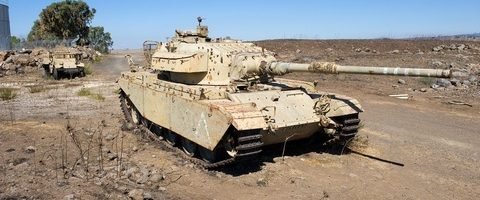
At the end of the first day, twelve of the thirteen Israeli outposts along the Bar-Lev Line had been taken by Egypt and 190 of Israel’s 290 tanks along the front had been destroyed. The Syrian advance forces had already reached the center of the Golan and were on the brink of breaking into Israel proper.
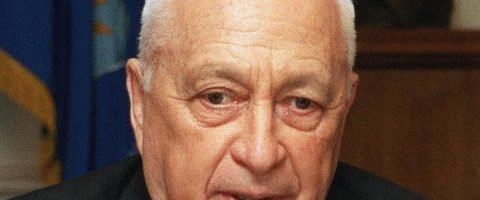
Twenty four hours after the attack had begun, the Israeli reserve units had raced to the front lines and the Israeli Chief of staff Lt.General David Elazar had brought the Syrian attack on the Golan to a halt and immediately planned a counter attack in the Sinai. Two fresh reserve divisions were available and one was placed under Gen. Ariel Sharon and the second under the command of Avraham Adan. The regular Sinai division was under the command of Gen. Avraham Mandler.
Within two days Israeli forces were fully deployed and it was decided to give the Syrian front priority and on October 10th the entire Golan was recaptured except for area of the Hermon which took a little longer. During that time an expeditionary force from Iraq was blocked and shortly afterwards the IDF was within artillery range of Damascus, the Syrian capital.
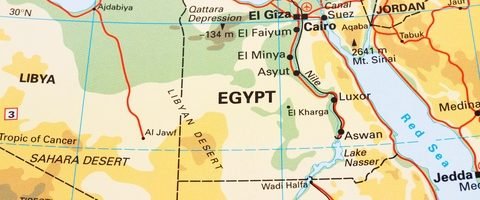
A counter attack was then launched on the Egyptian front and within a few days Israeli troops were in control of the west bank of the Suez Canal and 100 km from Cairo, the Egyptian capital.
The war came to an end on October 22nd when the U.N. Security Council called for an immediate cease fire. This vote came at the exact time that Israel had isolated the Egyptian Third Army and was at the point of destroying it.
Despite the ultimate successes by the IDF against what were insurmountable odds in favor of the enemy, the Yom Kippur war or 4th Arab-Israeli war was always considered a failure due to a total of 2,688 Israeli soldiers killed and 7,250 wounded. The odds had seemed insurmountable
He was born in Kfar Malal on the 26th February 1928 in what was then the British Mandate of Palestine, the second child of Dvora and Shmuel Sheineman who had immigrated to Palestine from Lithuania.
At the age of 14 he joined the 
The result of these actions were that the inhabitants of the cities Suez, Ismailia and Kantara left their homes and the cities became ghost towns. Thus the War of Attrition began.
After the Six Day War the surrounding Arab States, realizing that they had not achieved their objectives in a full scale war, began a strategy of sporadic isolated attacks against Israel – mainly along the Suez Canal and in the Jordan Valley and on a smaller scale on the Golan heights, the Lebanese border and Judea and Samaria, all fighting a terrorist war against Israel and Israeli overseas targets.
As a result the Egyptians pressed hard for even more Russian aid which they received, including Russian pilots who were flying the Russian fighter jets that were supplied to Egypt. An incident took place when a dog fight ensued over the Suez Canal with The Russians engaging with Israeli fighter jets and ended with 5 Russian jets being downed
From the beginning of the establishment of the State, Israel’s leaders had been expressing a desire for peace negotiations to begin with all its neighbors, however the surrounding Arab States were at no stage ready to reach any sort of peace agreement and in fact all overtures were met with rhetoric that made it clear that their stated goals were to eradicate the Zionist State. During the early part of the 60’s Israel faced constant border attacks especially from Jordan and Lebanon, and shelling of Israeli Kibbutzim and Moshavim in the Galilee from Syrian positions on the Golan Heights.

As the scale of the Israeli victory became apparent, the residents of the Hula Valley as well as those of the Jordan Valley began to lobby the Prime Minister to finally rid their lives of the constant shelling by Syria, by taking control of the
Problems began in July 1956 when British and French interests were threatened by the nationalization of the Suez Canal by
On the 29th October 1956 under the leadership of the Chief of Staff Moshe Dayan, a military operation was launched against Egypt. In the short time of 100 hours the whole of the