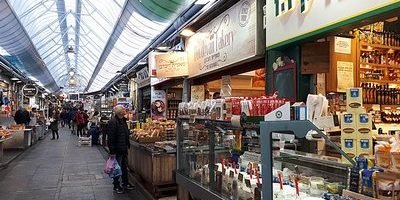
Israel’s largest open air market is located in downtown Jerusalem. This is the Mahane Yehuda market which has become the core of the authentic Jerusalem experience and enjoys great popularity with tourists and locals alike. The market itself has hundreds of vendors offering everything from fruit and vegetables, stalls with huge selections of herbs and spices, meat, fish and varieties of cheese to suit all palates as well as house wares and clothes.
Visitors from all walks of life enjoy wandering around this exciting place with its enticing aromas, its exhilarating colors and picturesque characters and vendors. The market was originally established towards the end of the 19th century between the neighborhoods of Mahane Yehuda and Beit Ya’akov and at that time was known as the Shuk Beit Yaakov. The shuk expanded rapidly and rather chaotically during the time of Ottoman rule. In about 1928 due to very poor sanitary conditions the authorities of the British Mandate closed the market and began building permanent stalls and roofing that would enable the merchants to begin trading under better conditions. At this time the market became known by its present name. Early in this century extensive renovations were again undertaken, roads were repaved and some areas covered.
The modernized and improved market has resulted in the opening of various Coffee shops, high quality bakeries, fashion boutiques and photography and art galleries as well as modern gourmet restaurants.
The Mahane Yehuda Market has today become a symbol of life in Jerusalem. There have even been songs and literary pieces written describing its bustle and ambience. It is definitely a must do on the agenda for tourists.


Archeological findings have suggested that people have lived in the area since the 4th millennium BC and that the city has been rebuilt many times over the centuries after being destroyed time and again.
In the Old Testament Bible, Beersheba is mentioned in the book of Genesis in connection with the Patriarchs Abraham, Isaac who built an alter there, and Jacob. Later, the area became the territory of Shimon and Judah (Joshua 15:28 and 19:2). Beersheba is also linked in the bible to the prophet Elijah. King Saul, who was Israel’s first king built a fort in Beersheba during his battle against the
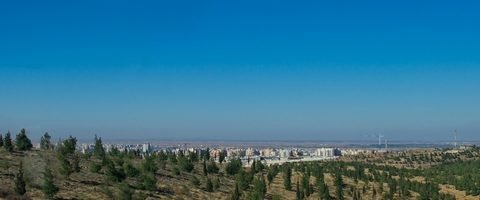
Today Beersheba is regarded as the gateway to the Negev and is a thriving modern city with a number of interesting places for local tourists and visitors from abroad to enjoy. Visit the Old Turkish Town with its well preserved old buildings and a wide selection of cheap stores and many ethnic restaurants. On the edge of the old town there is Abraham’s Well, and the Negev Museum housed in what was the residence of the Turkish Governor. Just next to the Old Town is the British First World War Cemetery where British, Australian and New Zealand troops were laid to rest.


There are museums that are housed in two of the original buildings. One is Beit Aharonson which is devoted to the Nili underground resistance organization. This spy ring was pro British and operated during the First World War in what was then Turkish controlled Palestine. This organization was under the leadership of Aaron Aharonson and his sister Sarah Aharonson who was acclaimed around the world as an agronomist. The Aharonson family was part of the early settlement of the area. Another museum is that dedicated to the First wave of immigration to Israel (
The Kibbutz has gone through a number of changes over the years but the original ideology of a society that is committed to social justice, mutual aid, the principle of joint property ownership, all receiving an equal education and all members having a home and all it implies according to their needs still remains in many kibbutzim.
It is 100 years since the first Kibbutz (named Degania) was set up near the shores of
A Kibbutz is not a village as no public roads runs through it and it is legally a completely private area. The economy is based on communal finances and economic and social activities are shared. There is a community kitchen with meals served in a communal dining room. Some Kibbutzim have tried sending food to members’ houses but the general consensus seems to be that members prefer communal dining facilities.
There have been many changes in the way the Kibbutz was run in the past and the way a number of kibbutzim are run today. Originally members joining a kibbutz were expected to transfer any assets that they had to the kibbutz. Now total equality has ceased and the concept of equality is provided mainly through food, health care and education. Children’s houses no longer exist and families live as a unit. Self management has been replaced with representatives elected by ballot. There are a number of other differences in various kibbutz movements but generally the kibbutz movement carries on. Many Kibbutzim also have hotel style guest houses for visitors and tourists to stay at while traveling around Israel.